
Products Description
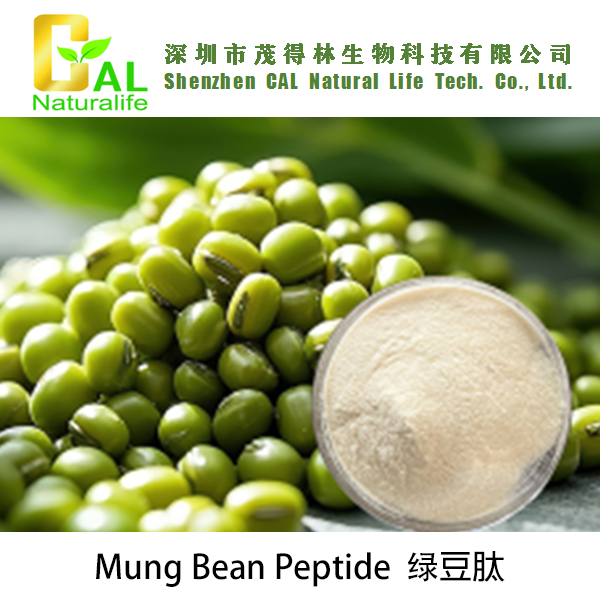
Mung Bean Peptide绿豆肽Protein ≥90.0; Oligopeptides(%) ≥80.0
Specification: 80% oligopeptides
Appearance: White or light yellow powder
Features: Debittered & Decolorized
Certificates: USDA and EU Organic, ISO22000; ISO9001, FSSC22000, HACCP, Halal, Kosher, NON-GMO Certification
Annual Supply Capacity: More than 5000 Tons
Free Sample: Available
Application: Nutritional Supplement; Healthcare Product; Cosmetic ingredients; Food additives
Excellent Solubility: It exhibits high solubility not only in water but also in alcohol.
High Stability: They demonstrate good thermal and acid stability.
Improved Palatability: It overcomes the unfavorable taste and poor water solubility associated with mung bean protein.
Nutritional Value
Balanced Amino Acid Profile: The amino acid composition of mung bean peptide closely resembles that of mung bean protein, being rich in various amino acids, including methionine, tryptophan, tyrosine, and arginine, and encompassing all essential amino acids.
High Protein Content: Mung bean peptide powder typically features a high protein content, making it a premium protein source.
Functional Properties
High Bioavailability: As small-molecule peptides with a low molecular weight (generally between 50-100 Daltons), it is readily absorbed and utilized by the human body.
Antioxidant Activity: They possess significant free radical scavenging capabilities, which may contribute to anti-aging effects and extend the shelf life of food products.
Immunomodulatory Effects: It can enhance the body's immune activity by increasing macrophage activity, promoting their proliferation, and inhibiting the expression of pro-inflammatory cytokines.
Antihypertensive Potential: These peptides exhibit angiotensin-converting enzyme (ACE) inhibitory activity, which can help lower blood pressure.
Metal Chelating Capacity: It demonstrates a strong metal chelating ability, making it a potential zinc fortifier and ferrous ion chelator.