

Products Description
What is D-Mannose?
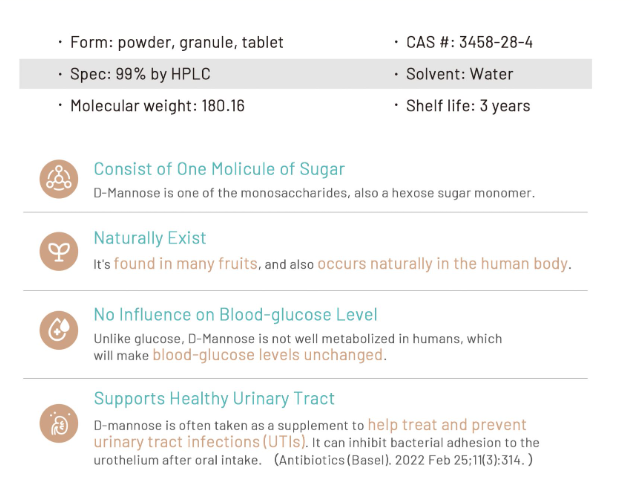
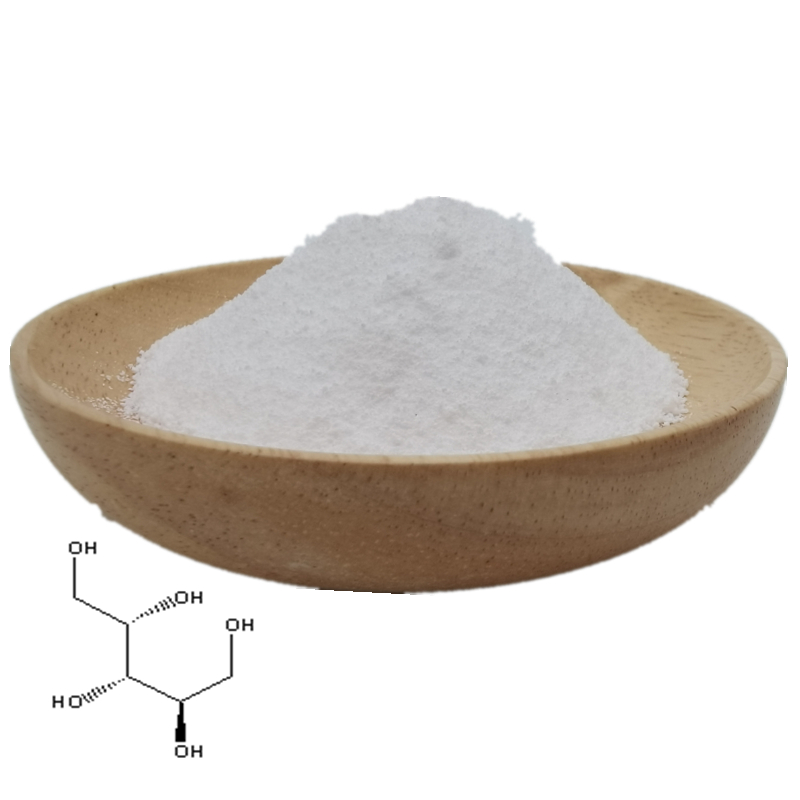
D-Mannose is a naturally occurring simple sugar (monosaccharide) that is related to glucose. It is found naturally in various fruits such as cranberries, blueberries, apples, peaches, and oranges, and is also produced in small amounts by the human body .
Unlike glucose, which is metabolized for energy, D-Mannose is not readily stored by the body. When ingested, it is rapidly absorbed and then excreted unchanged in the urine, which is a key characteristic underlying its primary health applications .
How Does D-Mannose Work?
The primary mechanism of D-Mannose involves its interaction with bacteria, specifically Escherichia coli (E. coli) , the bacteria responsible for up to 90% of urinary tract infections (UTIs) .
Molecular Mimicry: D-Mannose has a chemical structure very similar to the sugar molecules on the surface of the urinary tract lining (uroepithelial cells) that bacteria use to attach themselves.
Anti-Adhesion Effect: When D-Mannose is present in the urine, it acts as a decoy. Bacteria bind to the D-Mannose molecules instead of the bladder wall .
Elimination: Once bound, the bacteria can no longer stick to the urinary tract and are flushed out of the body during urination. This mechanism does not kill bacteria, which helps prevent the development of antibiotic resistance .
Key Health Benefits & Efficacy
1. Promotes Urinary Tract Health (Potential UTI Prevention)
The most common use of D-Mannose is for the prevention of recurrent urinary tract infections (rUTIs).
The Theory: By preventing E. coli from adhering to the bladder wall, D-Mannose stops the infection before it can start.
The Evidence: This is an area of active research. Recent, large-scale, high-quality studies have provided mixed results.
New Findings (2024-2025): The largest and most rigorous randomized controlled trial to date, published in JAMA Internal Medicine, found that D-Mannose alone was not effective at preventing recurrent UTIs compared to a placebo . A 2025 meta-analysis of six trials (1,167 participants) concluded that D-mannose did not significantly reduce the risk of recurrent UTIs compared to a placebo or no treatment .
Established Mechanism: Despite these new findings, the biological mechanism of action is well-established, and some earlier studies suggested a benefit .
Conclusion for Marketing: While the scientific evidence has become more cautious, D-Mannose is widely used and recommended as a complementary approach. Its value may lie in combination therapy or for specific patient subgroups, and it is considered a very safe alternative to long-term antibiotic use .
2. Supports Wound Healing (Emerging Research)
A 2024 study published in the Archives of Dermatological Research identified a novel application for D-Mannose .
Key Findings: When applied directly to a wound as a powder, D-Mannose almost halved the healing time compared to a standard antiseptic solution (povidone-iodine).
Reduced Scarring: The study also observed that D-Mannose resulted in a finer, denser fibrin matrix, which led to visibly reduced scarring after 49 days.
Mechanism: Researchers propose that D-Mannose activates Mannose-Binding Lectin (MBL), a protein of the innate immune system, which helps clear pathogens and cellular debris from the wound site more efficiently, thereby reducing inflammation and accelerating healing.
3. Treats a Rare Genetic Disorder (CDGS Type 1b)
D-Mannose is considered "Likely Effective" by medical authorities for treating Carbohydrate-Deficient Glycoprotein Syndrome Type 1b (CDGS 1b) , a rare genetic disorder .
For individuals with this condition, the body cannot properly produce or use mannose. Taking D-Mannose supplements can help prevent serious complications, including digestive problems, low blood sugar, and blood clotting disorders.
4. May Support Gut Health (Preliminary)
Early research suggests D-Mannose may act as a prebiotic, a substance that feeds beneficial gut bacteria . Unlike glucose and fructose, it may help decrease gut inflammation and support a healthy balance of gut flora, though more human studies are needed to confirm this effect.
Safety & Side Effects
D-Mannose is considered Generally Safe for most adults when taken for short periods (up to 6 months) .
Common Side Effects: Taking high doses may cause digestive issues such as bloating, diarrhea, or nausea .
Precautions:
Pregnancy/Breastfeeding: There is not enough reliable information to confirm safety, so it is generally recommended to avoid use.
Diabetes: People with diabetes should be cautious, as D-Mannose may affect blood sugar control .
Drug Interactions: There are no known major drug interactions, but you should always consult a healthcare provider before starting a new supplement, especially if you are on other medications.
Summary: D-Mannose is a natural sugar primarily known for supporting urinary tract health through a unique anti-adhesion mechanism. While recent major studies have questioned its effectiveness as a standalone UTI preventative, it remains a popular, safe alternative to antibiotics. Emerging research into its powerful wound-healing properties represents an exciting new direction for this supplement.