
Products Description
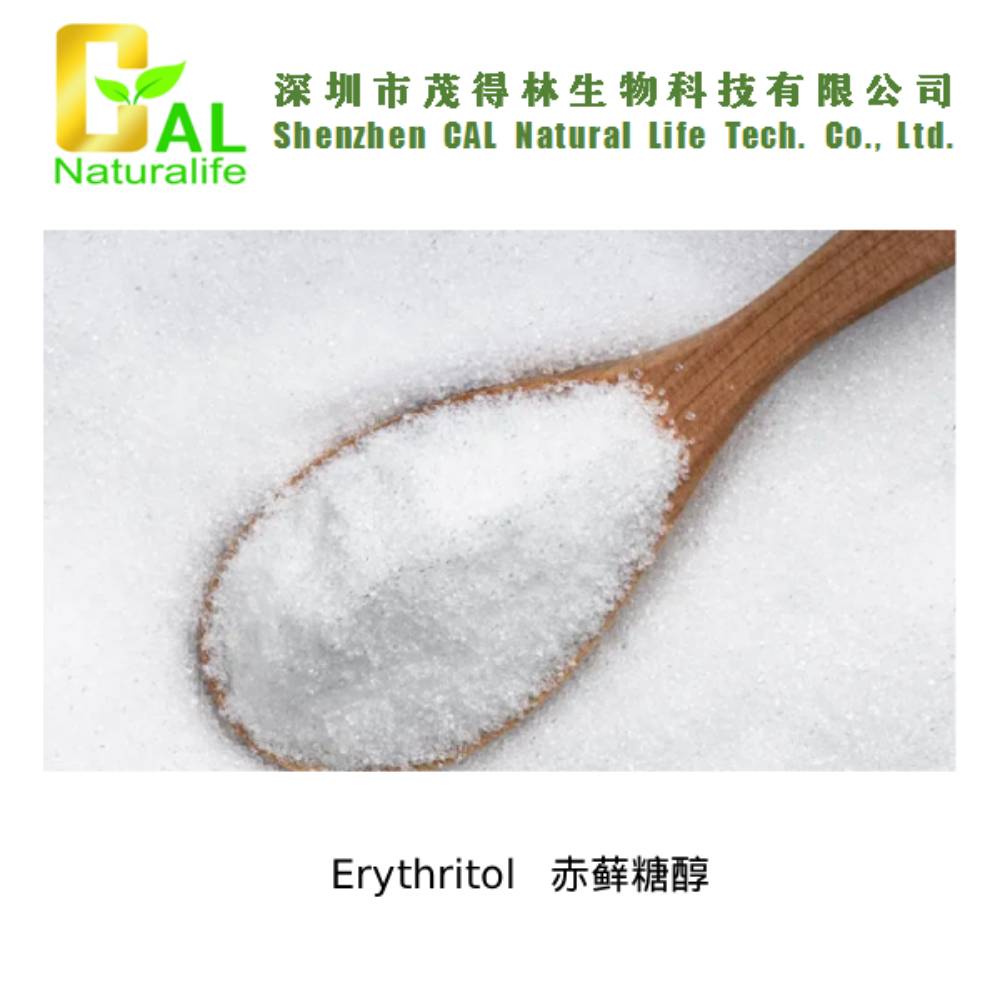
Erythritol is a sugar alcohol (polyol) found naturally in fruits like melons, grapes, and pears, as well as in fermented foods. It is widely used as a low-calorie sweetener.
Key Benefits:
Nearly Zero Calories
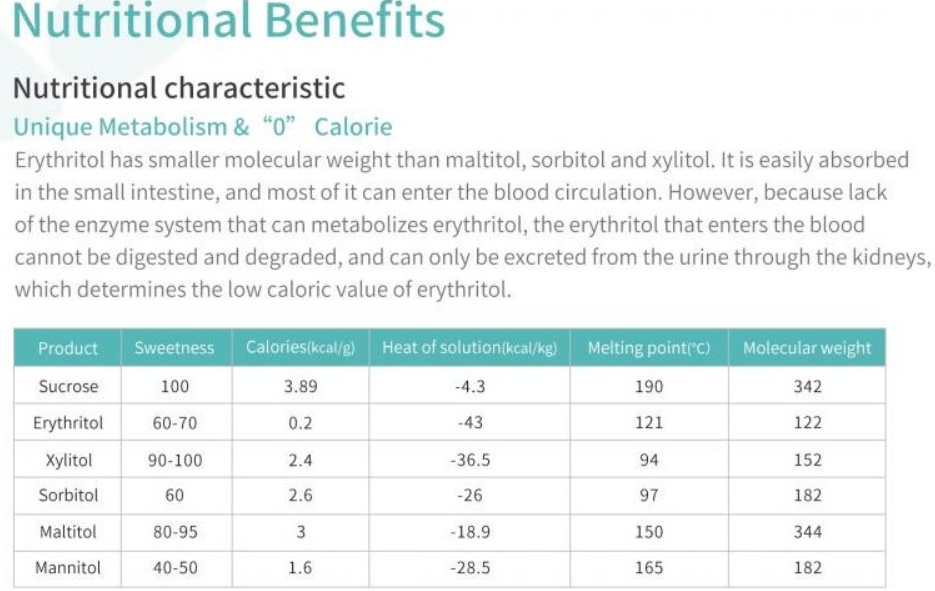
Erythritol provides only about 0.24 calories per gram (compared to 4 calories per gram of sugar), making it excellent for weight management.Does Not Spike Blood Sugar or Insulin
It has a glycemic index of 0. The body absorbs it but excretes it unchanged in urine, so it does not affect blood glucose or insulin levels — safe for diabetics and low-carb dieters.High Digestive Tolerance
Unlike other sugar alcohols (e.g., xylitol, maltitol), erythritol is absorbed in the small intestine and excreted via urine. Up to 80% is not fermented in the colon, so it causes significantly less gas, bloating, or laxative effects when consumed in moderate amounts (typically < 50g/day for adults).Good for Dental Health
Erythritol inhibits the growth of oral bacteria such as Streptococcus mutans, which causes cavities. Studies show it reduces plaque and tooth decay better than xylitol or sorbitol.Antioxidant Properties (in animal studies)
Early research suggests erythritol may act as a scavenger of free radicals, potentially protecting blood vessels from oxidative damage.Heat Stable for Cooking/Baking
It retains sweetness up to high temperatures (approx. 120–150°C), suitable for baked goods and hot beverages.
Note:
Erythritol is about 70% as sweet as sugar. Large doses (over 50g at once) may still cause mild digestive discomfort in some people. Also, recent studies (2023–2024) have linked high blood levels of erythritol to increased cardiovascular risk in at-risk patients, but this is from endogenous production or supplemented intake — more research is needed for dietary use in healthy individuals.